
From Symptoms to Solutions
A Self-Advocacy Guide for Midlife Women Who Are Done Guessing
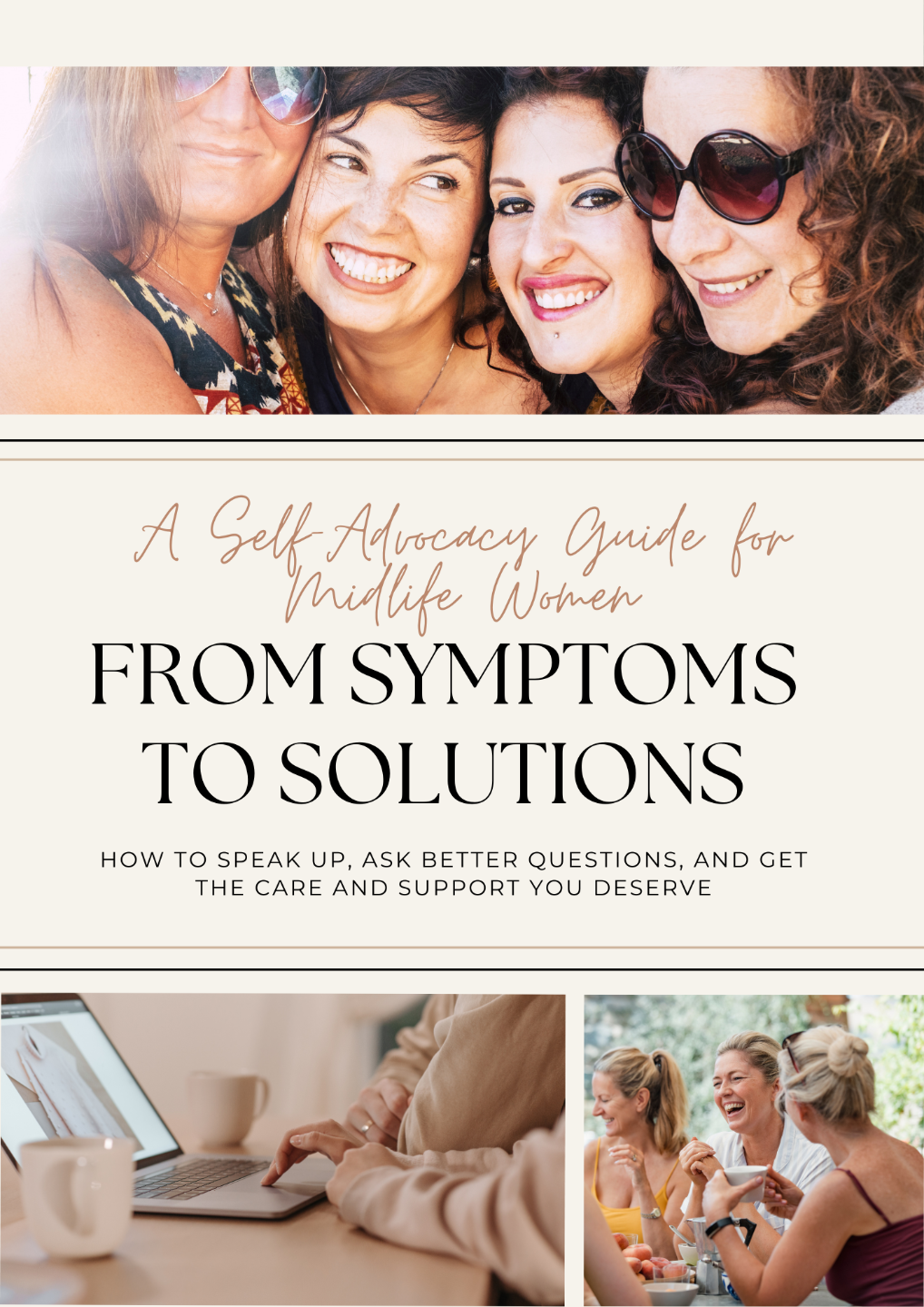
You don’t need more menopause information. You need to know how to use it — in real life, in appointments, and in conversations that actually matter.
This guide is for you if:
-
You’ve been told “everything looks normal” — but you don’t feel normal
-
You leave appointments with more questions than answers
-
You suspect hormones are involved but don’t know how to say that confidently
-
You’re tired of pushing through symptoms in silence
-
You want to feel prepared, informed, and taken seriously
Inside this 12-page mentor-led guide, you’ll learn how to:
✔ Track symptoms in a way doctors actually respond to
✔ Ask the right questions — and why they matter
✔ Know which labs are worth discussing (and which depend on symptoms)
✔ Prepare for appointments like the CEO of your own health
✔ Advocate at home, at work, and in relationships
✔ Stop minimizing your experience and start taking action
There’s no shortage of menopause education online. But here’s what’s missing: Implementation.
I teach women how to advocate, communicate, and make informed decisions that lead to real results.
This guide bridges the gap between:
“I’ve heard this before”
and
“I finally feel like I know what to do.”
WHAT’S INCLUDED
-
A step-by-step self-advocacy framework
-
Reflection prompts to clarify your priorities
- Appointment preparation checklists
- Scripts you can borrow (and customize)
Hi, I’m Karen Cerezo — nationally board-certified health coach, certified personal trainer, menopause educator, and author of
Navigating Menopause: A Comprehensive Wellness Tracking Journal.
I help midlife women stop playing small with their health and start advocating with clarity and confidence — without needing a medical degree or a confrontational personality.
This guide is the first step.
Because information isn’t power — action is.
Already tracking symptoms? This guide will show you how to turn that information into answers.
Download the Free Self-Advocacy Guide