The Loneliest Place to Go Through Menopause Is Inside Your Own House
May 18, 2026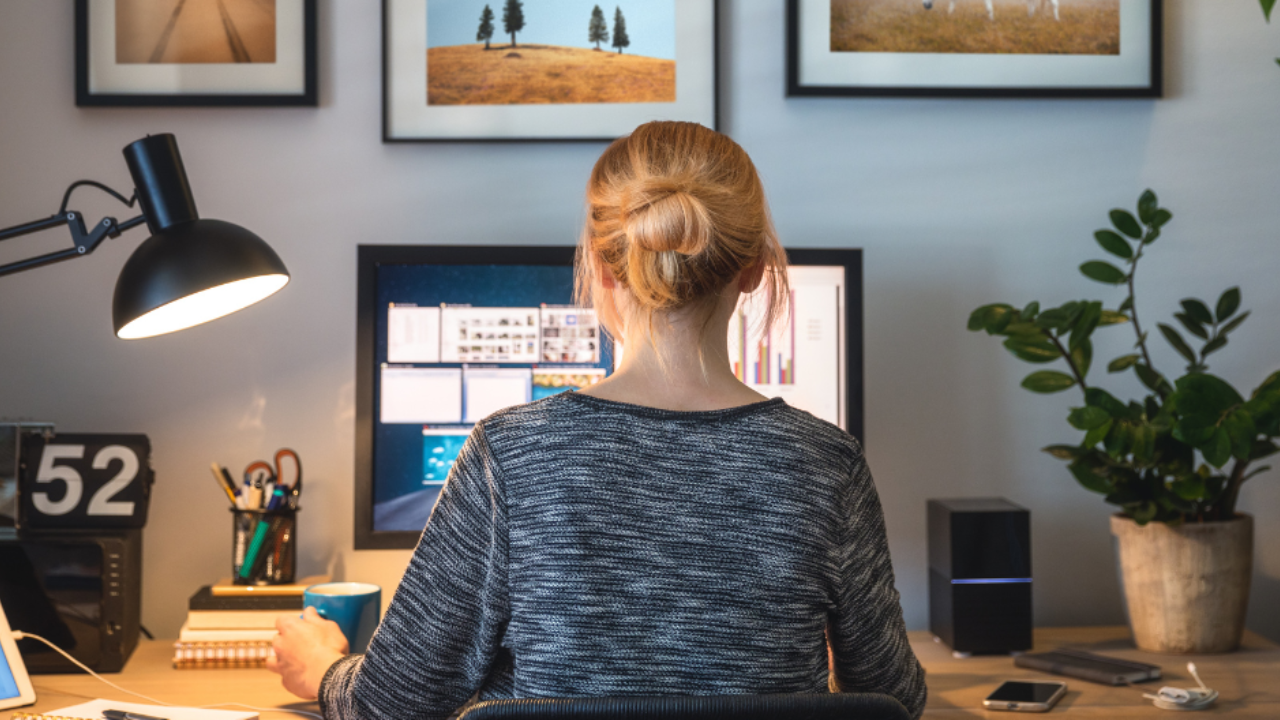
Everyone told me working from home sounded like a dream.
No commute. No dress code. No fluorescent lighting. No one watching when you need a moment to yourself.
And for a lot of women, it is. Until menopause shows up.
Because here's what nobody prepares you for: when you work from home and you're going through perimenopause or menopause, you are completely alone with it. There's no coworker who notices you've been staring at the same email for 20 minutes. No one sees the hot flash that just rolled through while you were on a Zoom call with your camera off. No one checks in when your mood has been all over the place for three weeks straight.
You just sit there. In your house. Managing it in silence.
And the silence, not the symptoms, is often the hardest part.
Does Isolation Make Menopause Symptoms Worse?
Yes. And now we have the science to prove it.
A study published in March 2026 in the journal Menopause found that loneliness and social isolation are both linked to cognitive decline in women beginning the menopause transition and women experiencing both were at the greatest risk, with their chances of cognitive decline increasing eightfold. (US News & World Report)
Eightfold.
This isn't just "it feels harder when you're alone." This is your brain, being measurably affected by the absence of connection during one of the most hormonally complex seasons of your life.
If you're a work-from-home woman in midlife, this is not background information. This is about you.
The Freedom That Isn't Free
Work-from-home women in midlife have a complicated relationship with their "flexibility."
Yes, you can wear layers and peel them off without anyone asking questions. Yes, you can turn your camera off during a hot flash. Yes, you can lie down for ten minutes when the fatigue hits so hard you genuinely can't function.
But that same freedom creates a trap.
When nothing is pulling you out of the house, you stop leaving. When no one is watching your schedule, structure disappears. When there's no commute forcing you to get dressed and move your body, you go from bed to desk to couch and back again and you wonder why you feel worse than ever.
Here's what I know from working with hundreds of women in midlife: isolation amplifies every menopause symptom.
The anxiety gets louder when you're alone with it. The brain fog feels more frightening when there's no one around to reality-check you. The fatigue becomes identity-level "this is just who I am now" instead of a symptom with a solution.
And the lack of movement? That's its own crisis. Because your body needs to move to regulate your hormones. Not punishing workouts. Not hours at the gym. Consistent, regular movement, ideally outside, that tells your nervous system it's safe, your cortisol to calm down, and your body that it's still capable and strong.
When you work from home, nothing gets you out of the house unless you've committed to something. And in menopause, that commitment isn't optional. It's medicine.
How to Manage Menopause Symptoms When You Work From Home
Here's the no-fluff version of what I tell every work-from-home client I work with.
1. Create a real morning routine and protect it. No structure equals cortisol chaos equals worse symptoms. Full stop. You don't have to wake up at 5am and do an hour of yoga. But get up at a consistent time, get dressed in something that isn't pajamas, and do something that signals to your body that the day has started. Even ten minutes outside before you open your laptop changes the entire hormonal trajectory of your morning.
2. Stop eating standing over the sink. I say this with love. But blood sugar instability wrecks your mood, your energy, your sleep, and your hot flash frequency. When you work from home, it's easy to graze all day and call it eating. It's not. Sit down. Eat real food. Prioritize protein. Do it on a schedule. Your hormones will thank you.
3. Build in a midday movement break and treat it like a meeting. Put it on your calendar. Set an alarm. Get outside if you can. Walk around the block. Do something that gets your lymphatic system moving and your eyes off a screen. This is not a nice-to-have. In menopause, it's non-negotiable.
4. Create at least one social touchpoint every single day. This is the one most WFH women skip. And it's the one that matters most. A phone call with a friend. An in-person fitness class. A walk with a neighbor. Something that puts you in contact with another human being who sees you. Loneliness and social isolation don't just feel hard, together they can nearly triple your risk of cognitive decline during the menopause transition. Connection is not a reward for finishing your work. It's part of the work of taking care of yourself.
5. Close your laptop at the same time every day. Working from home blurs the line between work and rest in ways that silently destroy your sleep. And in menopause, sleep is the first domino. When it falls, everything falls - mood, weight, cognition, energy, emotional regulation. Give your nervous system a consistent signal that the day is over. It will pay you back in better nights.
Why Community Is the Most Underrated Menopause Treatment
I want to come back to something, because I think it's the most important thing I can say. The women I work with who thrive during menopause are not the ones with the perfect supplement stack. They're not the ones who nailed the perfect diet or found the magic workout. They're the ones who found their people.
Women who go through menopause with community around them recover faster, move more consistently, sleep better, and feel less alone in their symptoms than women doing it in isolation. That's not just my observation, that's what the research confirms about how the nervous system responds to belonging.
We are wired for connection. And in midlife when everything is shifting, when your body feels unfamiliar, when you're not sure who you are on the other side of all this change, belonging to something is not a luxury. It is the thing.
You Were Never Meant to Do This Alone
If you're working from home, going through perimenopause or menopause, and managing it quietly in your house, I want you to hear this: The silence around you is not a reflection of how alone you actually are. There are millions of women in the same house, on the same Zoom call, eating the same lunch standing over the same sink, wondering the same things you're wondering.
Find them. Or let me help you find them.
Because the most powerful thing you can do in this season isn't optimize your supplements or overhaul your diet. It's find the woman next to you and say: me too.
👉 Grab my book Navigating Menopause: A Wellness Tracking Journal for Women on Amazon
👉 Book a Doctor Prep Session 45 minutes to build your personalized symptom list, your questions, and your doctor's visit script.
Karen Cerezo is a nationally board-certified health coach, certified personal trainer, menopause expert, TEDx speaker, and founder of Lifestyle Fitness. She works with women in midlife who are ready to stop pushing through menopause and start actually feeling like themselves again.
Stay connected with news and updates!
Join our mailing list to receive the latest news and updates from our team.
Don't worry, your information will not be shared.
We hate SPAM. We will never sell your information, for any reason.